Warehousing and logistics
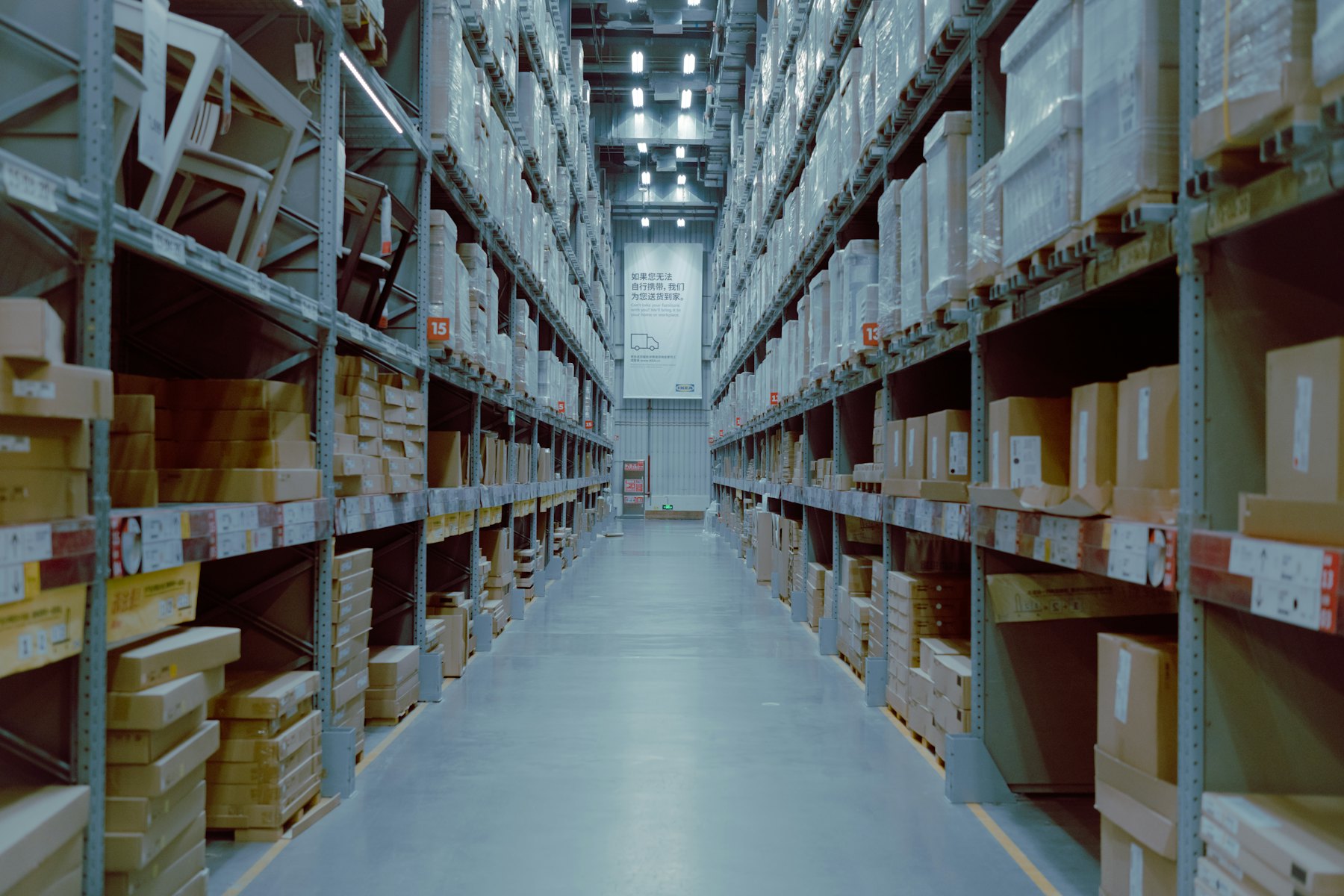
Warehouse lighting is mounted high, runs for long hours and has to light vertical rack faces between narrow aisles. Optics and controls decide both the result and the bill.
What decides the design
- Rack faces
- Pickers read labels on the rack face, so vertical illuminance down the full height of the racking matters as much as the lux on the aisle floor.
- Optics matched to the aisle
- Narrow-aisle distributions put light down the aisle and onto the racking. Wide distributions suit open marshalling and goods-in areas.
- Presence control by aisle
- Aisles are empty most of the time. Dimming each aisle to a low background level when unoccupied is usually the largest single saving available.
- Glare for drivers
- Fork-lift drivers look up at high-level pallets. Luminaire shielding and positions are checked from the driver's viewpoint.
Light levels
150 lux in manned aisles, with light on the rack face. The full list for this sector:
| Task or area | Lux | UGR limit | Uniformity | Ra |
|---|---|---|---|---|
| Store and stock rooms | 100 | 25 | 0.40 | 60 |
| Dispatch, packing and handling areas | 300 | 25 | 0.60 | 60 |
| Storage rack areas: gangways, unmanned | 20 | none | 0.40 | 40 |
| Storage rack areas: gangways, manned | 150 | 22 | 0.40 | 60 |
| Storage rack areas: control stations | 150 | 22 | 0.60 | 80 |
| Loading ramps and bays | 150 | 25 | 0.40 | 40 |
Later editions of the standard revise some values. How to read these figures